All news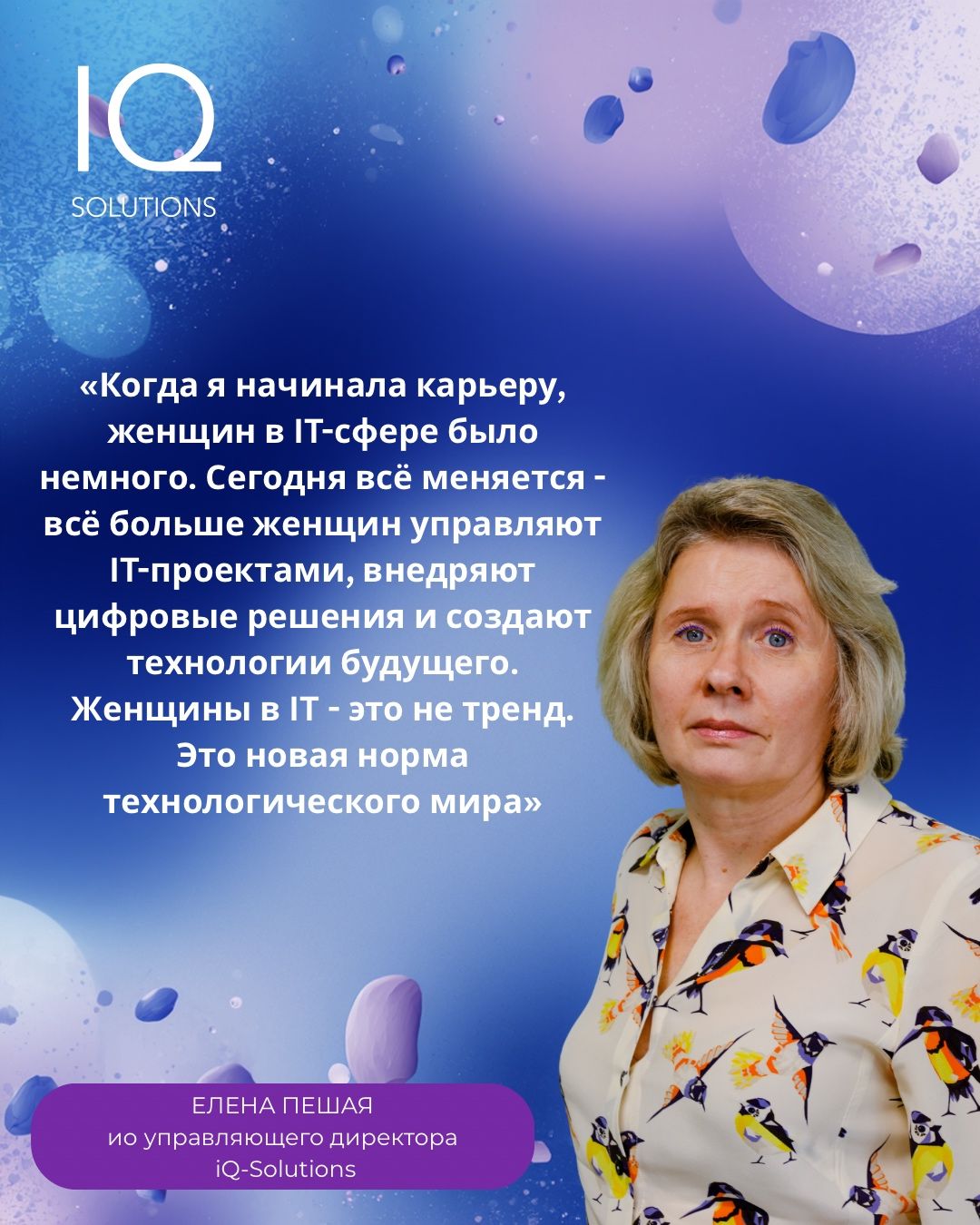
At the origins of SAP in Kazakhstan: stories from iQ-Solutions experts
Elena Peshaya and Dinara Mussayeva were part of Kazakhstan’s first SAP implementation and localization project. Their experience continues to shape iQ-Solutions’ ERP practice today.
In 1997, Kazakhstani specialists began the country’s first project to implement and localize SAP. Elena Peshaya and Dinara Mussayeva were part of that team. Today, they continue to develop the corporate automation practice at iQ-Solutions.
At the time, there were no established localization methods, training materials or accumulated SAP implementation experience in Kazakhstan. The task was not only to launch a new system, but to adapt it to local accounting requirements and to the way Kazakhstani enterprises actually worked.
In March, iQ-Solutions published “Women who create technologies”, a series of short stories about colleagues for International Women’s Day. The careers of two participants in that series deserve a separate story, because they are connected not only with technology development, but also with the formation of an entire area of Kazakhstan’s IT industry.
Elena Peshaya, Acting General Director of iQ-Solutions, heads the company’s Almaty branch and is responsible for strategic development, project management and cooperation with key clients, including Kazakhtelecom JSC and Almaty International Airport.
“When I started my career, there were few women in IT. At meetings, I was often the only woman at the table, and I quickly understood that the strongest professional argument is the result. A successfully delivered project speaks better than any words.
The first SAP implementation in Kazakhstan, carried out by our team, became exactly that kind of project. We could not rely on ready-made experience, but we delivered it. It taught me an important lesson: the difference between a difficult task and an impossible one is that someone has to be the first to take it on.
Today, the situation is changing. More women are managing IT projects, implementing digital solutions and helping create new technologies. Women make up 38% of the iQ-Solutions team. They include engineers, consultants and project managers responsible for complex implementations.
Women in IT are no longer an exception or a temporary trend. They are a natural part of the modern technology world. I am especially glad that a path that was unusual for our generation is now becoming a normal professional choice for young specialists.”
Dinara Mussayeva, Deputy Director of the Almaty branch and Project Manager at iQ-Solutions, has worked with ERP systems since 1997, when they were just beginning to appear in Kazakhstan.
“Back then, we often had to explain the very idea of SAP implementation: what it was, why an enterprise needed such a system and why it was not just another software product, but a different approach to managing a company.
There were no ready-made solutions. We had to adapt the logic of an international system to Kazakhstan’s accounting requirements. Many tasks were being solved for the first time, so the cost of error was especially high.
Technology has changed dramatically over the years. But the core principle remains the same: an ERP system helps a business see its processes as a whole, work with reliable data and make well-grounded management decisions. Versions, interfaces and deployment models change, but the essence remains.
My advice to young specialists is not to be afraid of the new. I began at a time when there were no established methods or examples, and that became one of the most interesting stages of my professional life. Today we are exploring artificial intelligence, and I again have the feeling of the late 1990s: so much is only beginning.”
Since 1997, both technology and business requirements have changed significantly. Early versions have given way to SAP S/4HANA, corporate systems can now integrate with IS ESF and other government information resources, and localization has become a mandatory stage of major ERP projects.
One principle has not changed since the first implementation: an international system must be adapted to the country’s requirements and the client’s business processes, not the other way around.
Today, this accumulated expertise helps iQ-Solutions adapt global technologies to Kazakhstan’s regulatory environment, integrate SAP with national information systems and build resilient corporate IT landscapes.
The experience that began with one complex project has become part of the iQ-Solutions professional school. This story continues in every new implementation delivered by the company.